
Why the Fluke 1000FLT Fluorescent Light Tester Can Save Time on the Job
A fluorescent lamp that flickers, fails to start or stops working does not necessarily need replacing. The problem could be the lamp, ballast, filament or power supply. Without the right testing equipment, identifying the fault often involves checking or replacing components one at a time.
The Fluke 1000FLT Fluorescent Light Tester is designed to simplify fluorescent lighting troubleshooting. It combines five essential lighting tests in one compact tool, helping electricians and maintenance technicians identify problems faster and avoid replacing components that are still working.
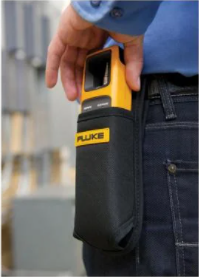
Diagnose fluorescent lighting problems with less guesswork
When a fluorescent light fails, replacing the tube may appear to be the quickest solution. However, if the ballast or electrical supply is responsible, installing a new lamp will not solve the problem.
The Fluke 1000FLT helps technicians check the main parts of a fluorescent lighting system through five testing functions:
- Lamp testing
- Ballast testing
- Non-contact voltage detection
- Pin continuity testing
- Electronic or magnetic ballast identification
According to the product specifications, these five checks can be completed in under 30 seconds. This allows technicians to narrow down the likely fault before removing parts or carrying out unnecessary replacements.
Test fluorescent lamps without removing them
Removing fluorescent tubes one at a time can make lighting maintenance slow, particularly in offices, warehouses, schools and commercial facilities with many fixtures.
The Fluke 1000FLT can test a fluorescent lamp while it is still installed in the fixture. A bright visual indicator and audible alert provide a clear result, allowing technicians to identify defective lamps more efficiently.
Testing lamps before replacement also helps reduce unnecessary parts costs and prevents working tubes from being discarded.
Check whether the ballast is working
A faulty ballast can produce symptoms that resemble a failed lamp, including flickering, delayed starting and complete lighting failure. This makes it difficult to determine which component requires attention based on the symptoms alone.
The ballast test on the Fluke 1000FLT helps technicians determine whether the ballast is operating. The tester can also identify whether the fixture uses an electronic or magnetic ballast without requiring the fixture to be taken apart.
Identifying the ballast type may also help maintenance teams locate older magnetic ballasts that could be considered for an efficiency upgrade.
Confirm voltage presence without direct contact
A lighting problem can also be caused by a missing electrical supply rather than a defective lamp or ballast. The tester’s non-contact voltage function allows technicians to check for the presence of voltage before proceeding with further diagnosis.
For electrical troubleshooting beyond fluorescent fixtures, technicians can also explore Chomar Unitrade’s range of electrical testing tools, including voltage testers, digital multimeters and clamp meters.
Non-contact voltage detection is an initial indication only. Appropriate electrical safety procedures and properly rated test instruments should still be used when verifying circuits or performing electrical work.
Test lamp pin continuity
Fluorescent lamp filaments can fail even when there is no obvious visual damage to the tube. The Fluke 1000FLT includes a pin continuity test that checks whether the lamp’s filaments have continuity.
Combining this result with the lamp, ballast and voltage checks gives technicians a clearer picture of the fixture’s condition. This reduces trial and error and helps them decide what needs to be repaired or replaced.
Improve routine commercial lighting maintenance
A fluorescent light tester is useful for more than responding to individual failures. Facilities with large numbers of fluorescent fixtures can use it during planned inspections to identify defective lamps and components.
Routine testing can help maintenance teams:
- Locate faults before they generate repeated complaints
- Group lamp and ballast replacements more efficiently
- Avoid unnecessary replacement of working components
- Reduce the time spent diagnosing each fixture
- Maintain more consistent lighting across a facility
These advantages are particularly valuable for technicians responsible for offices, warehouses, schools, hospitals, retail spaces and industrial facilities.
Carry one tool for five fluorescent lighting tests
Switching between several instruments can slow down a service call. The Fluke 1000FLT puts five commonly required tests into one tool and provides visual and audible results.
It also features an extendable metal test rod for reaching lamps in higher fixtures. The tester is drop-tested to withstand a two-metre fall and is supplied with a three-year warranty, making it suitable for regular field use.
Is the Fluke 1000FLT right for your toolkit?
The Fluke 1000FLT is particularly useful for electricians, facility maintenance teams and service technicians who regularly work with fluorescent lighting systems. Its main advantage is not simply performing a test. It is the ability to check the lamp, ballast, ballast type, voltage presence and pin continuity with one purpose-built instrument.
By identifying the likely fault earlier, technicians can spend less time testing components individually and avoid replacing parts unnecessarily.
View the Fluke 1000FLT Fluorescent Light Tester or contact Chomar Unitrade for product availability and assistance choosing suitable test equipment.
Frequently asked questions
What does the Fluke 1000FLT test?
The Fluke 1000FLT performs five essential checks: lamp testing, ballast testing, non-contact voltage detection, lamp pin continuity testing, and electronic or magnetic ballast identification.
Can the Fluke 1000FLT test a lamp without removing it?
Yes. It can test a fluorescent lamp while the lamp remains installed in the fixture, helping reduce the time required to inspect multiple lights.
Can it identify a faulty ballast?
The ballast test helps determine whether the ballast is operating. The tester can also identify whether the fixture has an electronic or magnetic ballast.
Who is the Fluke 1000FLT designed for?
It is designed for electricians, maintenance technicians and facility teams that regularly inspect or troubleshoot fluorescent lighting systems.
Does the Fluke 1000FLT replace a digital multimeter?
No. It is a purpose-built fluorescent lighting diagnostic tool. Depending on the fault and the work being performed, technicians may still need a properly rated digital multimeter or electrical tester for further electrical measurements.