Pressure Looks Right, But the Signal Is Wrong: Finding the Fault with the Fluke 717
A pressure transmitter may look fine at first glance, yet send the wrong 4 to 20 mA signal to the control system. If the displayed value does not match what is happening in the process, where do you start?
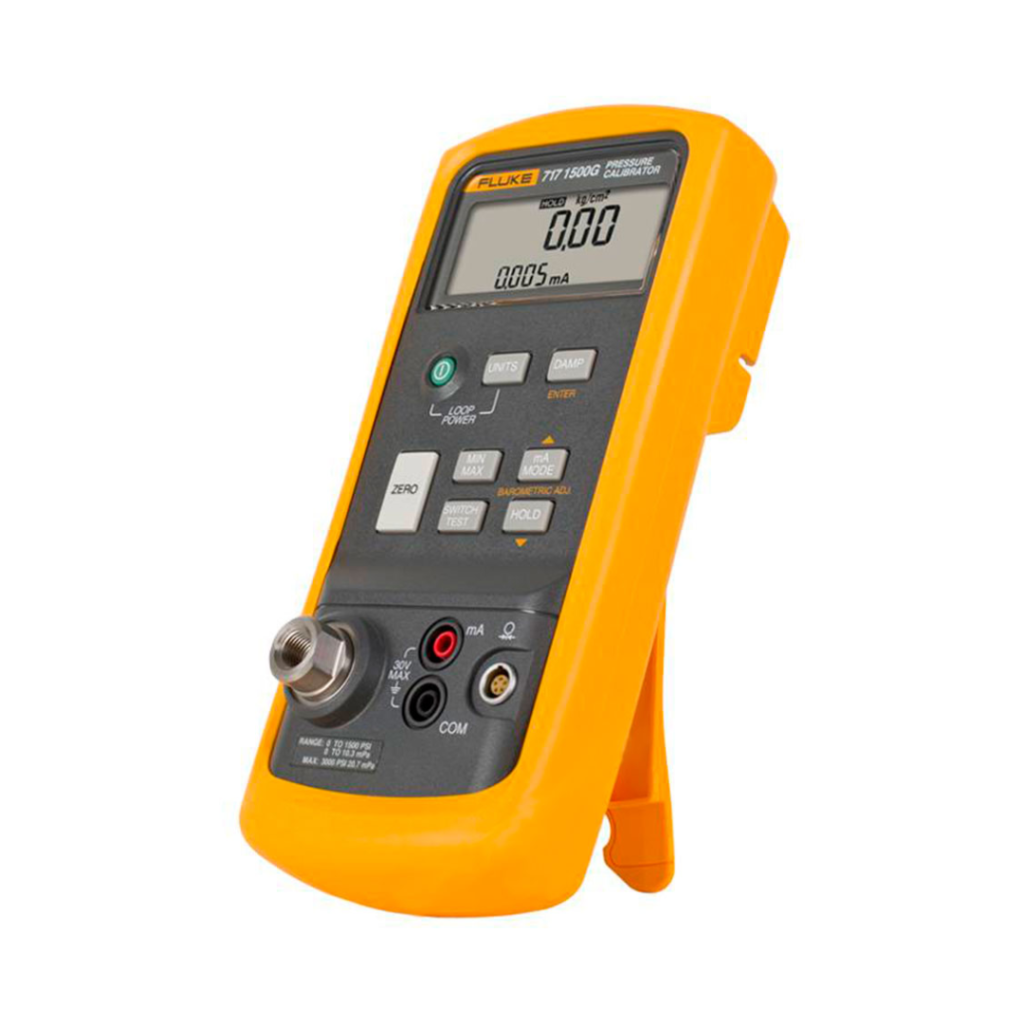
Start by checking the pressure applied to the transmitter against the current it produces. The Fluke 717 Pressure Calibrator measures pressure and mA at the same time, making it easier to compare the two during a transmitter check.
What should the transmitter output be?
First, confirm the transmitter’s configured pressure range. For a transmitter set to read 0 to 100 psi across a 4 to 20 mA output, you would expect 4 mA at 0 psi, 12 mA at 50 psi and 20 mA at 100 psi. A different configured range will give different expected values.
Use a suitable pressure source to apply a known pressure, then read both the pressure and the transmitter’s mA output with the Fluke 717. Its internal sensor measures pressure with 0.05% full-scale accuracy. The calibrator also measures current with 0.001 mA resolution and can supply 24 V loop power.
If the mA reading does not match the expected output, check the transmitter’s configuration and calibration. If the output is correct at the transmitter but the control system shows a different value, the next checks are elsewhere in the loop.
Check for calibration drift
A drifting transmitter can still respond to changes in pressure. The problem is that its output may be slightly high or low across the range.
The Fluke 717 measures pressure and current together and calculates the mA error percentage. Check several points across the transmitter’s range, rather than relying on a single reading, to see whether the output stays within the required tolerance.
Is the pressure switch operating at the right point?
A pressure switch clicking does not mean it switched at the correct pressure. The Fluke 717’s switch test captures the set point, reset point and deadband. You can compare those readings with the switch’s required settings, particularly when it is connected to an alarm or interlock.
Choose the right Fluke 717 range
The Fluke 717 is available with different internal sensor ranges up to 5,000 psi. Compatible Fluke 700Pxx pressure modules extend its measurement capability to 10,000 psi. Choose a model and pressure source suited to the instruments you test most often.
If your work covers several pressure ranges, browse Chomar Unitrade’s pressure calibration tools to compare the available options.
Need help selecting a Fluke 717?
Tell Chomar Unitrade the pressure range, transmitter type and tests you need to perform. Their team can help you choose the appropriate Fluke 717 model and discuss what you will need to apply pressure during testing.
Request a free Fluke 717 demo