
In a busy factory, pneumatic machines are expected to run continuously with very few stops. They power automated production equipment and move machine parts, and when compressed air starts leaking through a damaged valve, a worn hose or a loose fitting, it can go unnoticed for a while. The machine still works, but it struggles to hold steady performance or uses more air than it needs. Finding exactly where the air is escaping is one of the hardest parts of the job for maintenance technicians, especially when the parts are hard to reach.
How to Find Compressed Air Leaks in Pneumatic Equipment
How Small Leaks Affect Machine Performance
Pneumatic machines need a steady supply of compressed air to work properly. When air escapes through worn parts or broken connections, the system has trouble holding the pressure some tasks need.
The effects often build up slowly. An air tool loses power, a pneumatic cylinder moves more slowly, or a machine runs unevenly. Meanwhile, the compressor runs more often to make up for the lost air.
Leaks are most common in these areas:
- Air hoses: cracks, worn sections and damaged connections.
- Fittings and couplings: worn seals or loose connections.
- Control valves: worn seals or broken connections.
- Pneumatic cylinders: damaged seals, causing internal leaks or air escaping from the cylinder assembly.
- Quick-connect fittings: worn or incorrectly seated connectors.
Even a small leak is worth fixing when it runs through every production shift.
Why Leaks Are Hard to Find
Checking for compressed air leaks isn’t always as simple as listening for a hiss. In a factory, background noise from motors, compressors and production equipment can cover the sound of a small leak.
Access is the other problem. Some pneumatic connections sit between equipment assemblies, behind machine guards or in places that are hard to inspect. Soapy water on each suspected connection works, but checking a lot of parts one at a time takes a long time.
It gets harder again when several machines share one compressed air supply. A pressure drop might be obvious, but finding which connection is causing it takes a more targeted check.
Finding Leaks With Fluke Acoustic Imaging
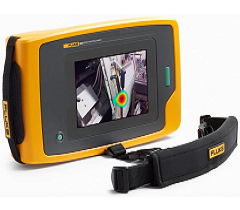
This is where acoustic imaging can help. The Fluke ii900 Sonic Industrial Imager and the Fluke ii910 Precision Acoustic Imager use an array of microphones to pick up the sound of escaping compressed air and show it as a SoundMap over a camera image, so technicians can see where the leak is on the screen.
Instead of relying on hearing alone, a technician scans the hoses, fittings, valves and pneumatic connections within reach and watches the display. Both imagers have frequency filtering to separate the sound of a leak from loud background noise, which makes a real difference on a busy production floor.
Both also have LeakQ mode, which gives an estimate of each leak’s size, so maintenance teams can decide which repairs to do first. The ii910 adds MecQ mode for mechanical inspections, such as bearing problems on conveyors, and PDQ mode for electrical partial discharge inspections.
With either model, technicians can find and record possible leaks across a system without testing each connection one by one. For more on leak detection with the ii900, see why every facility needs the Fluke ii900 for acoustic leak detection.
See an acoustic imager find a leak before deciding. Request a demo, and our team will show how the SoundMap and LeakQ work.
Choosing Between the ii900 and ii910
| Use | Fluke ii900 | Fluke ii910 |
|---|---|---|
| Compressed air and gas leak detection | Yes | Yes |
| LeakQ leak size estimate | Yes | Yes |
| Mechanical inspections (MecQ) | No | Yes |
| Partial discharge inspections (PDQ) | No | Yes |
For a site that mainly needs to find compressed air leaks, the ii900 covers the job. The ii910 suits maintenance teams that also inspect bearings, conveyors or electrical equipment and want one tool for all three.
Leak Inspections as Part of Regular Maintenance
Finding one leak doesn’t mean the rest of the pneumatic system is free of air loss. Nearby connections, hoses, valves and other parts that move often or go through frequent pressure changes should be checked too.
A practical routine is to scan the accessible connections, record the suspected leaks, set repair priorities and recheck the areas after the repairs are done. That way, maintenance teams catch leaks before machine performance starts to drop, rather than waiting for it to happen.
When pneumatic machines keep running, it’s easy to ignore a hidden leak. But wasted compressed air puts more load on the compressor and raises energy use. For facilities that maintain pneumatic equipment regularly, the ii900 and ii910 make hard leak inspections simpler, and maintenance teams spend less time looking for air loss and more time fixing the problems that affect production.
Chomar Unitrade is an authorized Fluke distributor in the Philippines. Tell us about the equipment and the leaks to be found, and we’ll recommend the right imager. Contact us on 02-7949 2618 or sales@chomarunitrade.com for a quotation.