
Exploring the Fluke 287 TrendCapture Feature
Modern electrical and electronics systems are more complex than ever and so are the problems they throw at you. Voltage drops that come and go, current that fluctuates under load, signals that look fine during testing but fail in the field. These intermittent faults are the ones that eat hours of your day and still leave you guessing.
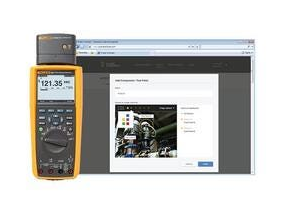
That’s exactly the kind of problem the Fluke 287 True-RMS Electronics Logging Multimeter was built for, and its TrendCapture feature is the main reason why.
Why a Single Reading Often Tells You Nothing
A traditional multimeter gives you a snapshot, what’s happening right now, at this exact moment. That’s fine for plenty of tasks, but for chasing down intermittent faults? It’s like trying to understand a movie by looking at one frame.
A circuit can measure perfectly normal when you probe it, only to drop out 20 minutes later when the load kicks in or the temperature shifts. So you replace a component, call it fixed, and the problem comes back. Sound familiar?
Trend-based diagnostics change that completely. Instead of asking what is the voltage right now, you start asking what has the voltage been doing for the past two hours. That shift from snapshot to pattern is where real troubleshooting begins.
What TrendCapture Actually Does
TrendCapture is a built-in logging and graphical display function. Once you start logging, the Fluke 287 automatically captures minimum, maximum, and average values across thousands of readings and plots them directly on the screen as a visual trend.
What makes it practical is how readable that display is. A sudden spike, a gradual drift, a voltage sag that keeps repeating at the same interval, these things jump out immediately. You’re not scrolling through raw numbers trying to spot something. The graph shows you exactly where the anomaly happened and roughly when.
Where It Makes a Real Difference
In electronics work, TrendCapture is invaluable for spotting unstable power rails, supplies that look fine at idle but wobble under actual circuit load. In industrial settings, it catches the voltage sags and current surges that happen when motors start up or heavy equipment cycles on and off.
It’s also a strong tool for preventive maintenance. Log a baseline on a healthy system, come back a few months later, log again, and compare. Changes in those trends, gradual drifts, new spikes, tighter variance, often signal wear or failure before anything actually breaks down. That kind of early warning is worth a lot in terms of avoided downtime.
True-RMS Makes the Data You’re Logging Actually Reliable
Logging a lot of bad data isn’t much better than logging nothing. That’s why the True-RMS measurement capability in the Fluke 287 matters so much here. With non-linear loads, distorted waveforms, and the kinds of complex signals produced by variable frequency drives and switching power supplies, average-responding meters give you inaccurate readings.
True-RMS measures what’s actually there. Combined with long-term logging, you get data you can actually trust and act on — not numbers that look reasonable but quietly lie to you.
It Saves Time in a Way That Actually Adds Up
The practical value of TrendCapture isn’t just diagnostic, it’s also about how you spend your time. Instead of hovering over a panel and retesting repeatedly hoping to catch a fault in the act, you set the meter to log, walk away, and handle other work. When you come back, the trend is there waiting for you.
That changes the entire troubleshooting workflow. Better data means fewer wrong turns. When you can see clearly whether a problem is a power quality issue, a failing component, or something driven by load changes, you stop guessing and start fixing.
From Numbers to Insight
Good troubleshooting has always been about understanding behavior over time, not just measuring a value at a single point. The Fluke 287 TrendCapture feature makes that kind of analysis genuinely accessible, no laptop required, no external data logger, no post-processing. The trend is right there on the screen.
As electrical systems keep getting more complex, the ability to see patterns rather than just numbers becomes less of a nice-to-have and more of a basic requirement for doing the job well.
Ready to Work Smarter?
If you’re still relying on spot checks to chase down difficult faults, the Fluke 287 True-RMS Electronics Logging Multimeter is worth a serious look. The TrendCapture feature alone changes how you approach intermittent problems and combined with True-RMS accuracy and extended logging capability, it’s a tool that earns its place in the kit of anyone doing serious electronics or industrial electrical work.