
How to Detect Insulation Weakness Before It Leads to System Failure
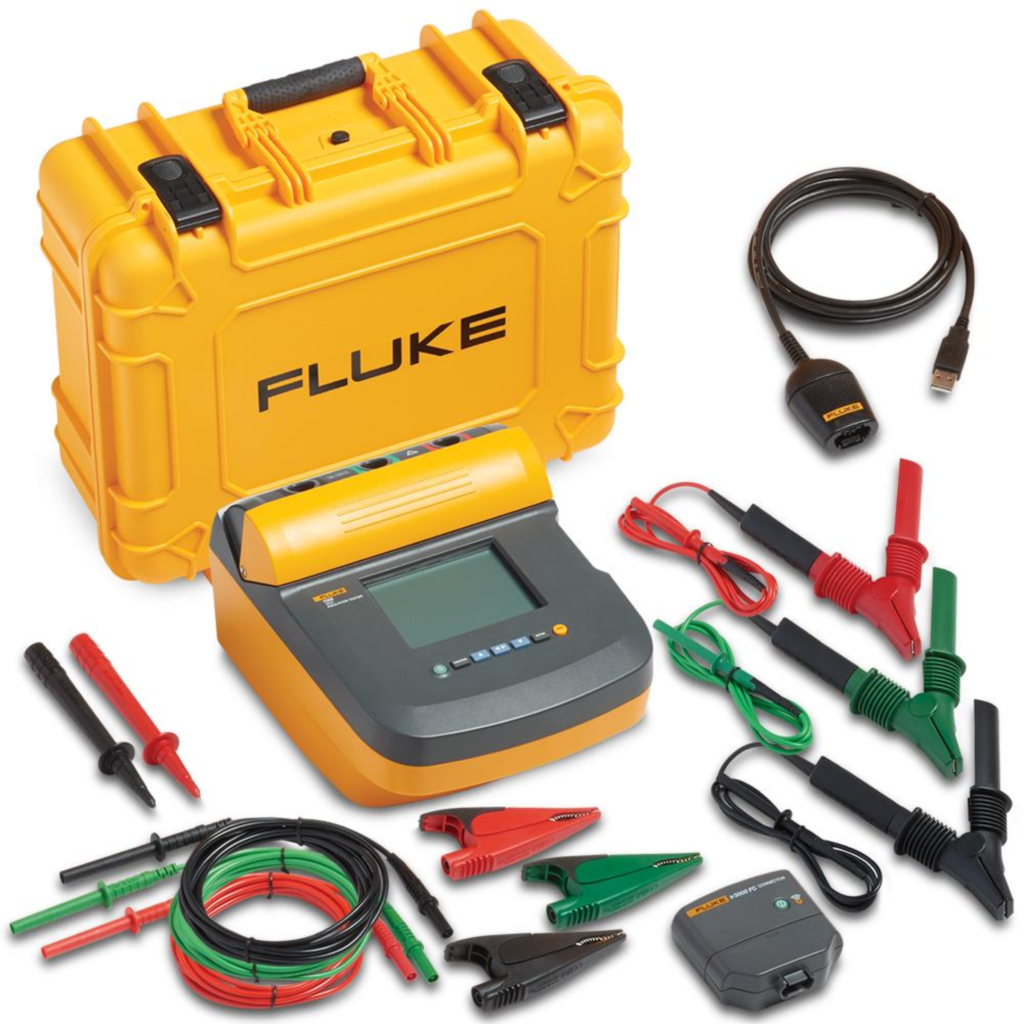
Electrical insulation plays a critical role in keeping industrial systems safe and reliable. When insulation begins to break down, it can lead to equipment damage, unexpected downtime, and serious safety risks. The challenge is that insulation problems usually develop gradually and go unnoticed until something fails. With tools like the Fluke 1555 FC 10 kV Insulation Tester Kit, technicians can identify these weaknesses early and act before they escalate.
Why insulation health should never be overlooked
In high-voltage systems, insulation is the primary barrier preventing electrical leakage and short circuits. Over time, heat, moisture, dust, vibration, and simple aging all degrade insulation materials. That process is rarely visible from the outside, which is exactly why routine checks matter.
Ignoring insulation health invites sudden equipment failure and costly repairs. Regular testing surfaces potential issues early, so maintenance teams can protect system stability and avoid unplanned disruptions.
Spotting the early warning signs in electrical systems
Insulation failure rarely happens overnight. It usually begins with small changes in resistance that worsen over months or years. These changes may not affect daily operations at first, but they steadily increase the risk of breakdown.
Insulation resistance testing lets technicians measure how well that insulation is actually performing. A drop in resistance can point to deterioration, contamination, or moisture ingress. Catching those signals early makes it possible to fix the root cause before serious damage occurs. For lower-voltage equipment and general troubleshooting, a handheld unit such as the Fluke 1507 Insulation Resistance Tester is often enough, our guide on detecting insulation problems early with the Fluke 1507 covers that workflow in detail.
The advantage of high-voltage insulation testing
Standard testing methods do not always reveal deeper insulation issues, particularly in high-voltage equipment. This is where a dedicated megohmmeter earns its place.
The Fluke 1555 FC performs insulation tests at voltages up to 10 kV, giving a far more accurate picture of insulation strength. It covers the full range of test voltages specified in IEEE 43, calculates Dielectric Absorption Ratio (DAR) and Polarization Index (PI) automatically, and measures resistance up to 2 TΩ. A built-in guard system removes the effect of surface leakage current on high-resistance readings, so the number you see reflects the insulation itself rather than dirt on the surface.
Just as importantly, Fluke Connect lets technicians configure, start, and stop tests from a safe distance using a smartphone, with real-time trending displayed as a live graph instead of rapidly changing digits. If your equipment tops out below 5 kV, the Fluke 1550C FC 5 kV Insulation Tester Kit applies the same approach at a lower test voltage.
Applying insulation testing in real-world scenarios
High-voltage insulation testing is used across a wide range of industrial applications. Motors, transformers, cables, and switchgear all depend on sound insulation to operate safely.
Testing a motor’s insulation, for example, can reveal early signs of winding degradation. In cable systems, it helps identify sections affected by moisture or physical damage. In transformers, it can flag insulation aging that would otherwise progress quietly toward failure. These insights let maintenance teams target their work precisely and extend the service life of critical assets.
For technicians who need insulation testing and general electrical troubleshooting in a single instrument, the Fluke 1587 FC Insulation Multimeter combines both functions, we compare that approach in Combining Insulation Testing and Multimeter Functions in One Tool.
Strengthening your preventive maintenance strategy
Preventive maintenance works best when it is built on accurate data. Insulation testing supplies exactly that, supporting better planning and clearer decisions.
Building regular testing into maintenance routines lets teams track insulation trends over time. That trend line makes it far easier to predict when equipment will need servicing or replacement, reduces the likelihood of unexpected failures, and improves overall system reliability. Our article on smarter preventive maintenance with the Fluke 1587 FC walks through how to structure a testing schedule around it.
Not sure which insulation tester fits your equipment? Get a free technical consultation with Chomar Unitrade and we will match the right Fluke tester to your voltage range and application.
Stop risking failures and upgrade your testing capability
Waiting for insulation to fail is a costly mistake. Downtime, damaged equipment, and safety incidents are all far more expensive than prevention. For high-voltage systems, reliable testing is not optional — it is a baseline requirement for any operation that values uptime and continuity.
The Fluke 1555 FC 10 kV Insulation Tester Kit delivers the precision and confidence needed to catch problems before they escalate. It ships in an industrial-strength case with the heavy-duty leads and clips required for field work, carries a CAT III 1000 V / CAT IV 600 V safety rating, and is backed by a three-year warranty. For teams that want to stay competitive and minimize costly disruptions, a high-performance insulation tester pays for itself in reliability and long-term savings.
Chomar Unitrade is the authorized Fluke distributor in the Philippines. View the Fluke 1555 FC 10 kV Insulation Tester Kit, browse the full range of insulation testers, or call 02-7949 2618 to arrange a free on-site demo.